Alliances and factions are strong political tools. The Dutertes and Marcoses not only continue to grow in popularity but also sustain their political legitimacy through the security granted by their allies and supporters. Despite its dissolution, the UniTeam has shown the power of what a collaboration of forces can do. Beyond familial labels, the Philippine government is built on the accumulation of elite interests, networks, and favors that mutated the country’s political culture into a nigh impenetrable elite-led democracy.
To combat this, an opposition is therefore sought after. Ideally, a unified one, free from any ties to the country’s gluttonous oligarchy. A tall order for those already jaded and disillusioned by the outcomes of “tactical alliances.” Instead of realizing a solidified anti-elite opposition, the best that has come from these progressive forces are fragmented movements and campaigns. With glaring symptoms such as the occurrence of splintered anti-corruption protests, fractured support for candidates and parties, disjunct EDSA commemorations, as well as varying positions on the resignation of public officials, a solidified opposition to lead popular democracy appears to be far from reach.
Now that Sara Duterte has announced her bid for presidency, the publics are on their toes to block the punisher’s clan from returning to Malacañang. Thus, it appears that not only is a united opposition the only collective conundrum for Filipino progressives but so is the resolution for a mutually-agreed upon standardbearer that can trump the Dutertes in 2028.
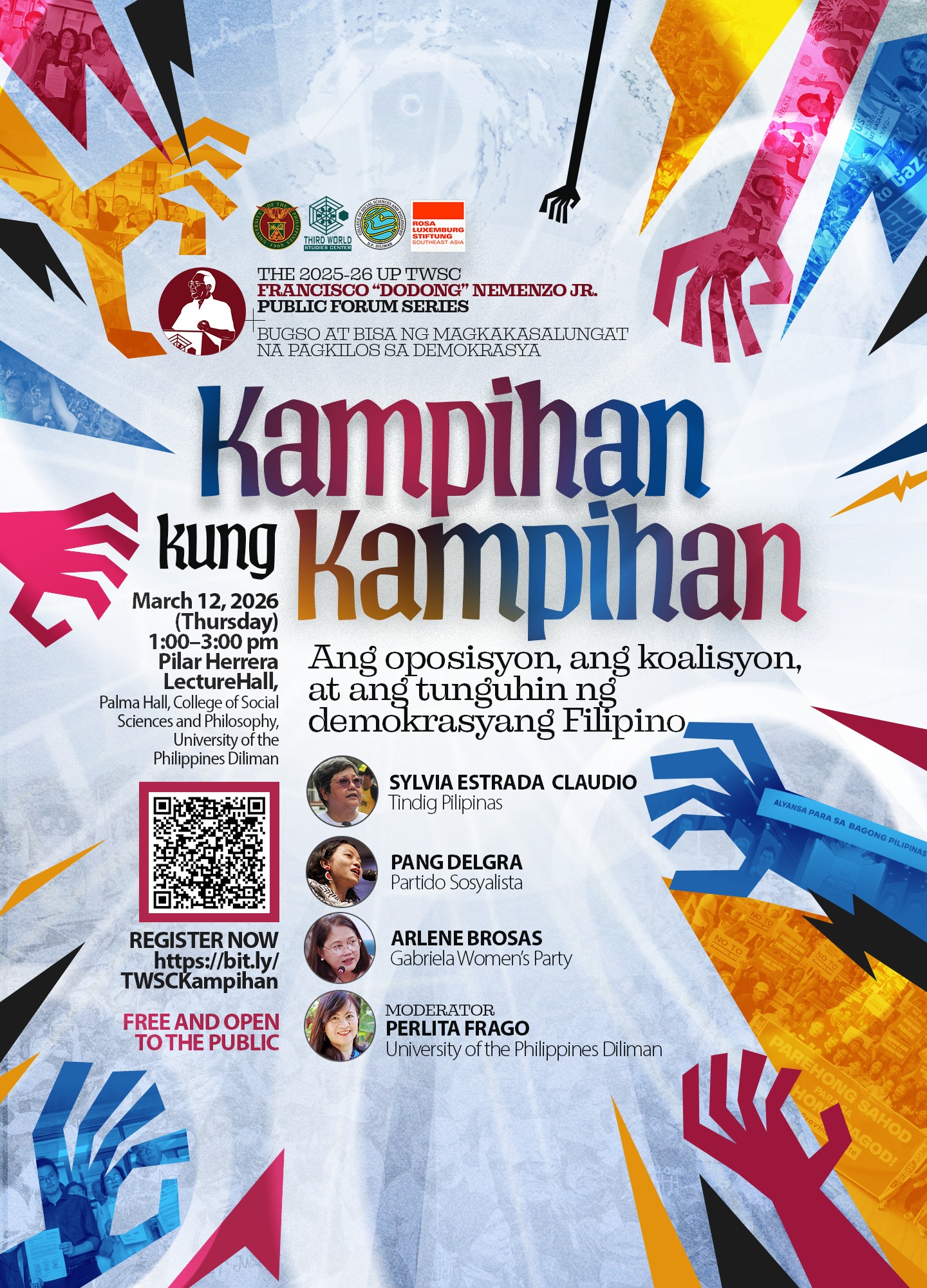
The final installment of the 2025-2026 Francisco “Dodong” Nemenzo Jr. Public Forum Series confronts the troublesome predicament of opposition-building. The discussion raises the concerning question of how a corrupt system can be changed with a fragmented progressive opposition—an opposition that often treats its allies as rivals? Is a unified progressive coalition even possible in a symptomatically pluralistic political landscape? How can this fragmentation shape the political climate and democratic mobilization of 2026 going into the 2028 national elections? Who has authority in constructing the composition and goals of this coalition? Can the progressives progress from this dilemma? What would be the democratic agenda of this broad coalition of progressives?